The FBI and CISA recently warned that hackers are targeting commercial refrigeration systems to spoil food and damage equipment. You can read the full advisory here.
Yes, your refrigerator is running. On your network. With the default password "admin123." And a hacker in another country just logged into it.
If your healthcare facility stores medications, vaccines, blood products, or food, this warning applies to you. Your refrigeration systems are part of your network infrastructure now, whether you think of them that way or not.
Why Your Fridge Went to College (Got a Network Degree)
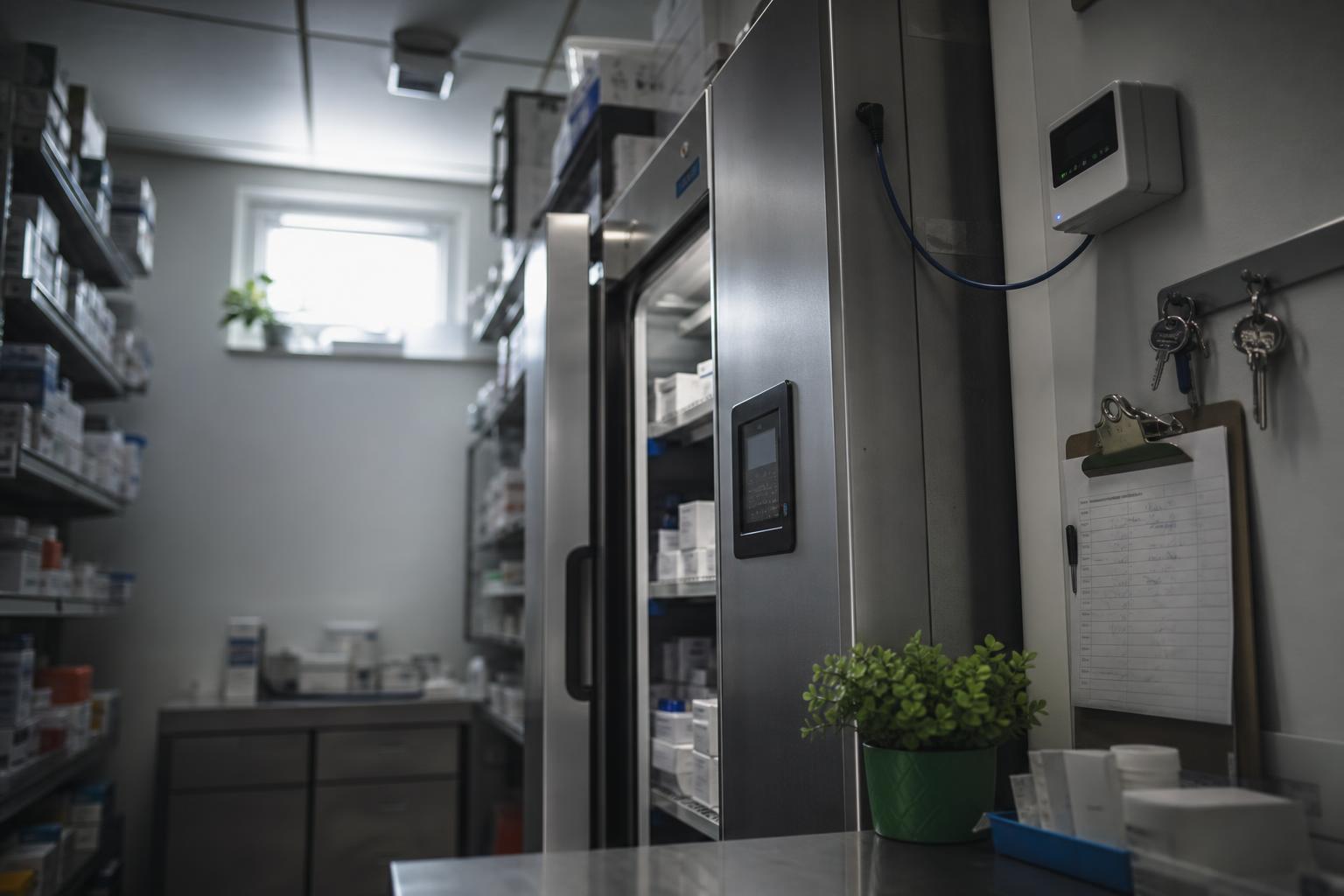
Modern commercial refrigeration uses internet-connected controllers. These systems let you monitor temperatures remotely, receive alerts, and adjust settings from your phone. Very convenient. Also very hackable.
Many of these controllers ship with default passwords that never get changed. Some use outdated software with security holes you could drive a refrigerated truck through. Most connect directly to your network or the internet without proper security controls.
The people who installed your refrigeration system probably were not thinking about cybersecurity. They were thinking about keeping things cold. Neither were the manufacturers in many cases. These systems were designed for convenience and cost, not security.
Turns out the Internet of Things includes the Internet of Cold Things. Who knew that was a bad idea?
When Hackers Put Your Fridge on Ice (Literally)
A hacker who gains access to your refrigeration controls can change temperature settings, disable alarms, or shut the system down entirely. The goal might be to spoil expensive inventory, disrupt your operations, or hold the system for ransom.
For a hospital pharmacy or lab, this could mean ruined medications worth thousands of dollars. For a surgery center, it could mean cancelled procedures. For a nursing home kitchen, it could mean throwing out days of food and explaining to health inspectors why the walk-in cooler decided to become a walk-in room-temperature-er.
The damage goes beyond immediate losses. You may face regulatory issues if stored materials fall outside required temperature ranges. You will spend time and money investigating what happened and what might have been compromised.
It is hard to explain to an auditor that your vaccine storage was compromised because someone in another time zone thought it would be funny to turn your freezer into a sauna.
Start With an Inventory (Find Your Smart Appliances)
Find every refrigeration system in your facility that has any kind of network connection or remote monitoring capability. This includes walk-in coolers, pharmacy refrigerators, lab freezers, medication storage units, and kitchen equipment.
Document the make, model, and how each system connects to your network or the internet. Note whether the connection is wired, wireless, or cellular. Find out who has access to the control systems and how they log in.
Many healthcare facilities discover they have more connected refrigeration than they realized. That medication refrigerator in the nurse's station might have a wifi-enabled temperature monitor that no one in IT knows about. Surprise! You have more internet-connected appliances than a tech reviewer's kitchen.
Check Your Current Security (Spoiler: It Is Probably Bad)
Look at each system and ask these questions:
- Does it still use the default password from the manufacturer?
- When was the software last updated? (Be prepared for "never" as an answer)
- Is it on your main network or a separate segment?
- Who can access it remotely and how?
- Does it send alerts if settings change unexpectedly?
- Is there a log of who accessed the system and when?
If you find default passwords, change them immediately. If you find systems that have never been updated, that is your next priority. If you find a refrigerator that is basically wearing a "hack me" sign, you have found most of them.
Segment Your Network (Put the Cold Stuff in Its Own Corner)
Your refrigeration controls should not be on the same network segment as your patient records or business systems. Put operational technology like refrigeration, HVAC, and building controls on a separate network.
This limits what a hacker can reach if they compromise one system. It also lets you apply different security rules to different types of equipment.
If your refrigeration vendor needs remote access for maintenance, give them access through a VPN or secure remote access tool. Do not leave remote access open all the time. Your fridge does not need to accept visitors 24/7 like it is running a bed and breakfast.
Monitor and Alert (Know When Something Goes Warm)
Set up monitoring that alerts you to unexpected changes. You want to know if someone changes temperature settings, disables alarms, or logs in from an unusual location.
Make sure your temperature monitoring alerts still work and that the right people receive them. Test them periodically. An alert that goes to an email address nobody checks anymore is just a digital participation trophy.
Review access logs if your systems keep them. Look for login attempts at odd hours or from unfamiliar locations. If someone in Kazakhstan is adjusting your medication refrigerator at 3 AM, that is probably not your on-call pharmacist.
Work With Your Vendors (Have the Awkward Conversation)
Contact the manufacturers or service providers for your refrigeration systems. Ask about available security updates and best practices for securing their equipment.
Some vendors offer managed monitoring services that can watch for security issues along with temperature problems. Some have newer, more secure controllers you can upgrade to.
If a vendor cannot or will not help you secure their equipment, that tells you something about whether you want to keep working with them. If they act surprised that someone might want to hack a refrigerator, find a vendor who lives in this century.
Document Your Procedures (Write It Down Before Something Melts)
Write down who is responsible for each refrigeration system, how to access it, and what to do if you suspect a problem. Include this information in your incident response plan.
Make sure your IT staff knows these systems exist and how they connect to your network. Make sure your facilities staff knows to involve IT when they have refrigeration issues that might be security-related.
Nobody wants to be in an emergency meeting explaining that they thought the freezer acting weird was a maintenance issue, not a hacker turning your vaccine storage into a science experiment.
The Practical Takeaway
Schedule time this week to inventory your connected refrigeration systems and check their security basics. Change any default passwords you find. This is not a project to put off until you have budget or time. The systems are already installed and already at risk. An hour of work now prevents much bigger problems later.
Your refrigerator is running. On your network. Make sure it is not running away from you.
Not sure your IT is as solid as it should be? Take 10 minutes and tell us about your setup. No pressure, no obligation.
Book a 10-Minute Discovery Call →Last updated: November 6, 2026